What Is Stamped Concrete?
Stamped concrete is a normal structural pour with a decorative surface pressed into it while the concrete is still plastic. Polyurethane texture mats cast from real stone, slate, brick or timber are laid across the fresh slab and tamped, transferring the texture and the joint lines in one operation. The result reads as natural material from a metre away, but it is a single monolithic slab with no joints for weeds, ants or settlement.
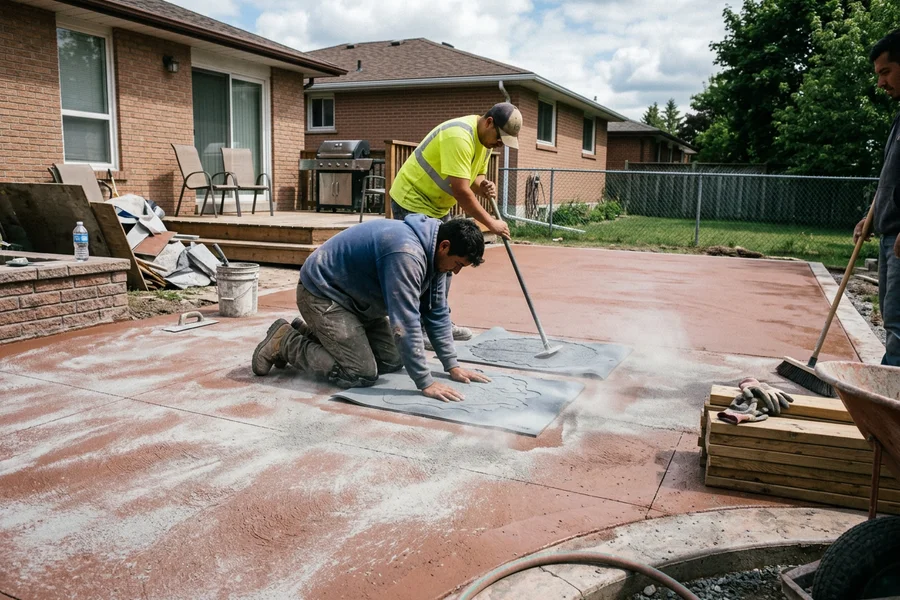
Colour happens in two layers. Iron-oxide pigment goes into the concrete at the plant so the base colour runs through the full slab depth. Then a powder release agent, tinted in a contrasting shade, is broadcast across the surface before stamping. The mats press some of that pigment into the low points of the texture, and washing off the excess a day later leaves the darker accent settled in the grout lines and recesses. That two-tone effect is what makes stamped concrete look like stone rather than like patterned concrete.
The whole thing hinges on timing. The stamping window is measured in minutes, and it closes across the slab in the same order the concrete was placed. Staffing a stamped pour properly, with enough hands to get the mats down across the full area within the window, is the difference between a crisp uniform impression and a slab that is sharp at one end and mushy at the other.
What’s Included
- Pattern and colour selection with physical samples
- Excavation, compacted base and reinforcement
- Integrally coloured air-entrained concrete
- Tinted powder release agent
- Polyurethane texture mats pressed across the full slab
- Hand-detailed grout lines at edges and radii
- Wash-off to reveal the antique accent tone
- Saw-cut control joints aligned to pattern lines
- Solvent acrylic sealer with a slip-resistant additive
Common Problems We Solve
A Plain Grey Slab That Drags the House Down
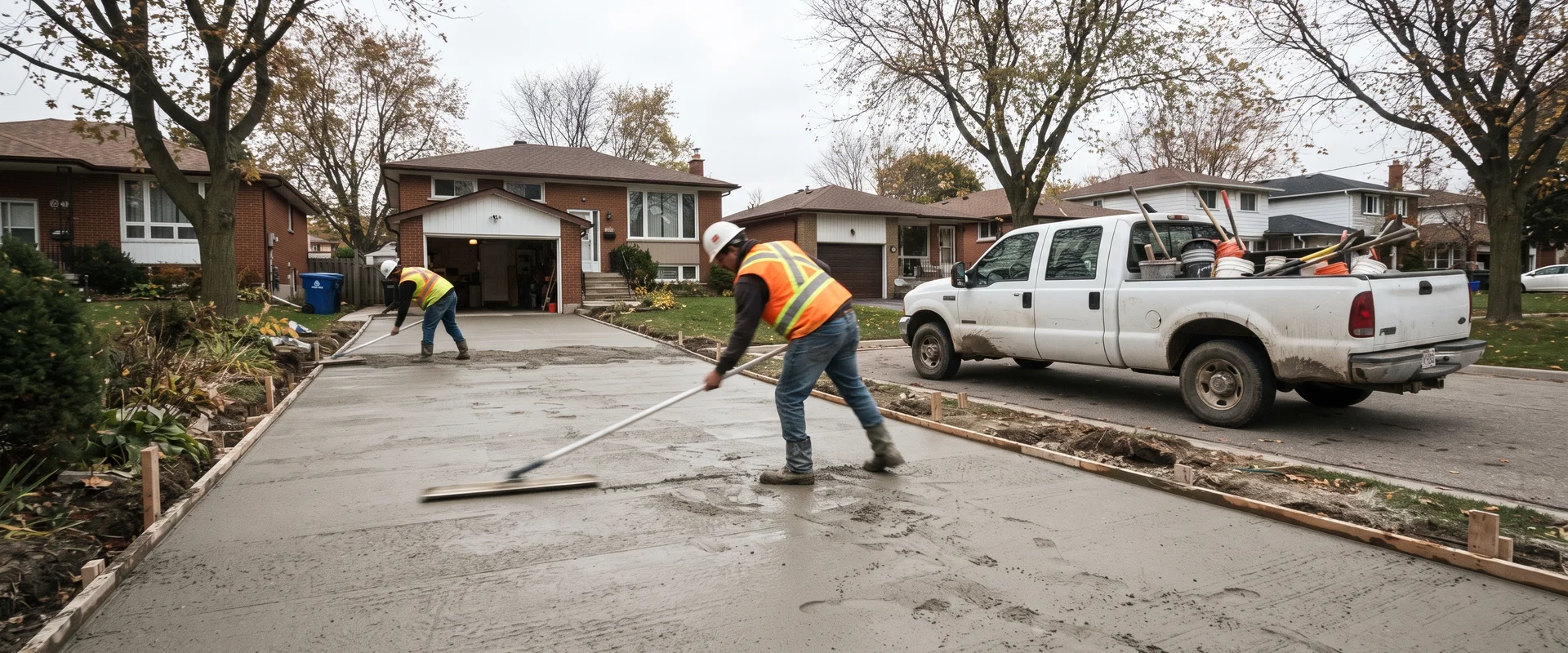
The most common reason people call us about stamping. Where the existing slab is sound and level, a stamped overlay applies a polymer-modified layer over the prepared surface and stamps that, giving the full decorative effect without a tear-out. Where the slab is failing, a new stamped pour is the right call.
Pavers That Keep Settling
Interlocking pavers are individual units sitting on a bedding course, and in Toronto clay they move. Stamped concrete is one slab, reinforced, with control joints cut where we choose. Nothing lifts, nothing rocks, and nothing grows between it.
Faded, Worn Stamped Concrete
Stamped surfaces that were never resealed lose their accent colour and start to wear. Re-sealing on a two to three year cycle is what maintains it, and a badly faded surface can usually be recoloured and resealed rather than replaced.
Slippery Decorative Surfaces
A sealed stamped surface without a slip additive is genuinely slick when wet. We add a slip-resistant polymer to the sealer on every exterior stamped job as standard.
How Much Does Stamped Concrete Cost in Toronto?
Stamped work runs $12 to $25 per square foot. The drivers:
- Pattern complexity. A single running pattern is faster than multiple patterns with an inlaid border.
- Colour system. One integral colour costs less than integral plus an antique release wash.
- Area and shape. Large simple rectangles stamp efficiently; small areas with many edges need extensive hand detailing.
- Overlay versus new pour. An overlay over a sound slab avoids demolition and base work.
- Access. Backyards without truck access need pump or wheelbarrow placement, and stamping needs the concrete placed quickly.
- Sealer specification. UV-stable and premium sealers cost more and last longer.
Choosing a Pattern
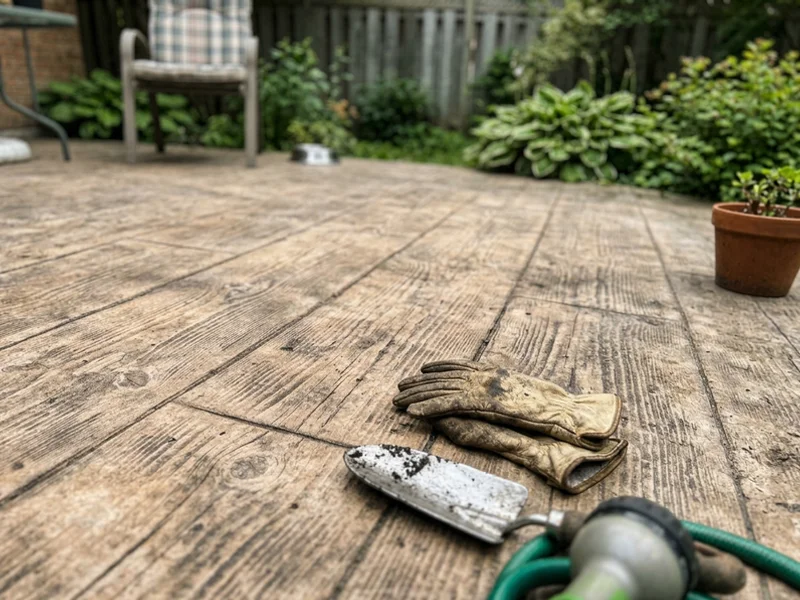
Ashlar slate is the most versatile and forgiving, with irregular rectangles that suit most house styles. London cobblestone reads as older, more traditional, and works particularly well on driveways. Running-bond brick ties into brick houses and makes an excellent border pattern around a different field. Wood plank has become the most requested pattern for backyard patios: it gives a deck look with none of the maintenance. Random stone is the least regular and the best choice where you want the surface to look genuinely quarried.
We bring physical samples to the quote visit, because texture depth does not photograph honestly and the choice matters for years.
Maintenance
Reseal every two to three years. That single habit determines whether stamped concrete still looks rich at year ten or looks tired at year five. Sweep and rinse as needed, avoid metal shovel edges on the surface in winter, and use a chloride-free ice melt where you can. Everything else takes care of itself.
Send us the area, the pattern you like and a photo of the house, and we will come back with a written published-rate quote inside two hours.