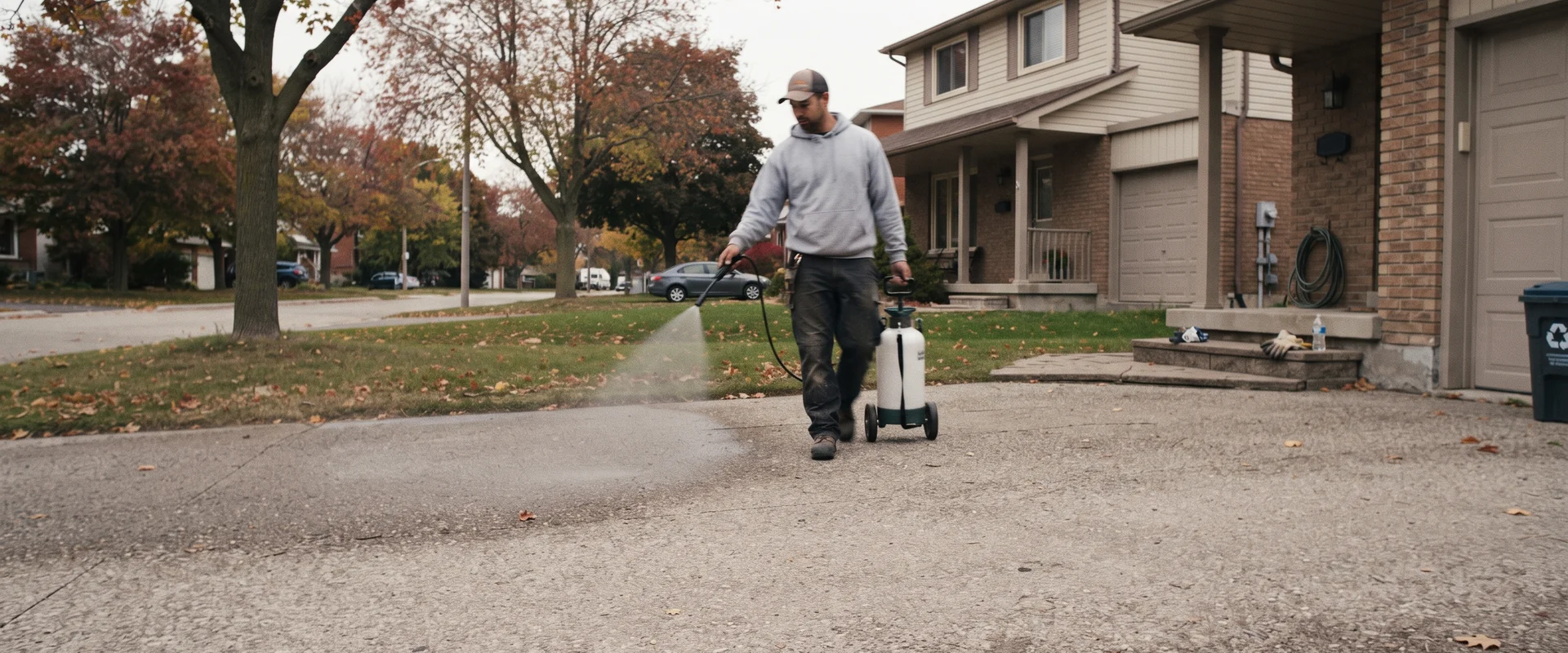
Worker spraying penetrating sealer across a concrete driveway at a Toronto home

Concrete Sealing & Waterproofing for Toronto Weather

Silane-siloxane, acrylic and penetrating sealers and densifiers that protect against freeze-thaw and salt.

  • verified 2-Year Workmanship Warranty
  • shield WSIB + $2M Liability
  • schedule 2-Hour Quote Window
  • star 4.9 Google Rating
Published pricing $1.5 - $3 per sq ft
  • 4.9 Star Google Rating
  • Published Pricing
  • 2-Year Workmanship Warranty
  • WSIB + $2M Liability
  • 2-Hour Response Window
  • 24/7 Phone
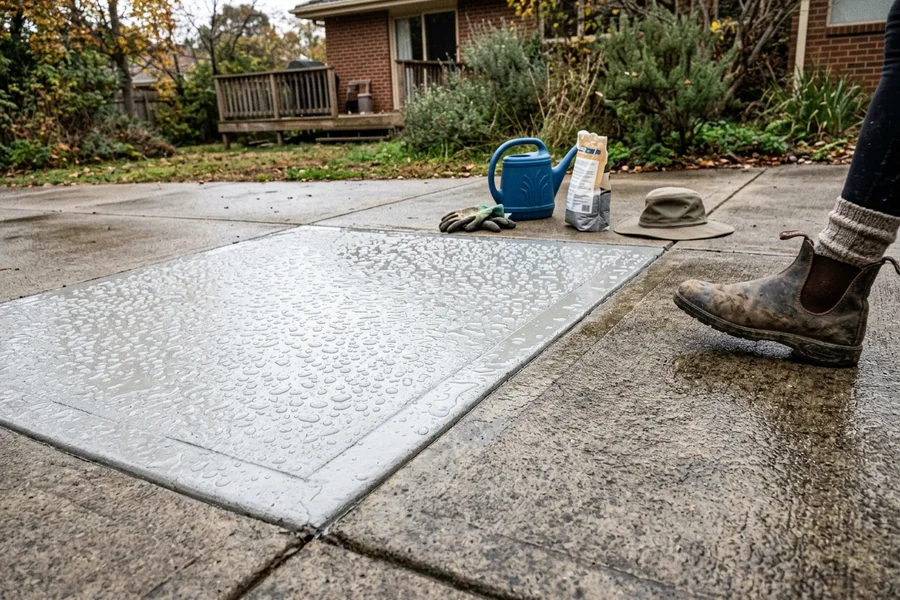
Water beading on sealed concrete beside an unsealed section where water soaks in

What Does Concrete Sealing Do?

Sealing is the cheapest thing you can do to concrete and the one with the best return. At $1.50 to $3 per square foot, resealing a driveway every few years costs a fraction of what a replacement costs at $10 to $16, and it is the single largest factor in whether a GTA slab reaches thirty years or starts failing at twelve.

The mechanism is straightforward. Concrete is porous. In Toronto, road salt dissolves into meltwater, that chloride-laden water soaks into the surface, and then it freezes. Water expands roughly nine percent when it freezes, and inside a confined pore that expansion generates enough pressure to break the concrete apart from within. Repeat it a hundred times a winter and the surface scales away layer by layer. Chloride also reaches embedded rebar and corrodes it, and corroding steel expands enough to split concrete from the inside.

Sealers interrupt that cycle by keeping the water and the chloride out. Which sealer depends entirely on the surface and its exposure, and this is where most sealing jobs go wrong.

What’s Included

  • Surface assessment: age, porosity, existing sealer and exposure
  • Cleaning, efflorescence removal and stripping of failed sealer
  • Drying time before application
  • Product selection matched to the surface
  • Even application with a maintained wet edge
  • Second coat on high-exposure areas where specified
  • Slip-resistant additive on walkways, steps and pool decks
  • Cure time and a written reseal schedule

The Four Product Types

Silane-siloxane penetrating sealers soak into the concrete and react inside the pore structure. They form no film, so there is nothing to peel and no change to how the surface looks or grips. They block chloride while still letting the slab breathe. This is our default for driveways, walkways and any plain exterior concrete.

Acrylic sealers form a thin film on the surface. They darken and enrich colour, giving the wet-look finish that stamped and exposed aggregate work is usually sold with. They protect well but need reapplication more often and can be slick when wet, so a slip additive goes in as standard.

Lithium-silicate densifiers react with free lime inside the concrete to form additional binder. They harden the surface and reduce porosity rather than coating it. Standard on interior floors and used alongside polishing.

Below-grade waterproof coatings are a different class entirely, applied to the outside face of foundation walls before membrane and backfill. They are part of foundation work rather than surface maintenance.

Common Problems We Solve

Driveways Scaling After Three Winters

Almost always an unsealed slab, sometimes combined with concrete that was not properly air entrained. Sealing what is left slows further damage, though surface already lost has to be resurfaced.

Stamped Concrete Losing Its Colour

The accent colour on stamped work lives in the top surface, and without a maintained sealer it wears and fades. Resealing every two to three years is what keeps decorative concrete looking the way it did on day one.

Efflorescence Returning

That white powdery bloom is free lime carried out by moisture moving through concrete. Washing it off and sealing reduces the moisture movement that causes it.

Failed Previous Sealer

Peeling, hazy or blotchy sealer is usually a film-former applied over a damp or dirty surface, or applied too thickly. It has to be stripped before anything new goes down, which we quote as part of the work.

How Much Does Sealing Cost in Toronto?

Sealing runs $1.50 to $3 per square foot. Drivers:

  • Product. Penetrating sealers cost less per foot than premium acrylics or densifiers.
  • Number of coats. High-exposure areas benefit from two.
  • Preparation. Stripping failed sealer or removing heavy staining adds labour.
  • Surface texture. Exposed aggregate and stamped surfaces use more product than smooth slabs.
  • Area. Larger areas are more efficient per square foot.

Timing Matters

New concrete needs about 28 days to cure before sealing, and any curing compound needs to have worn off or been removed. Sealing early traps moisture and produces hazing or outright failure.

Weather matters too. The surface must be genuinely dry, temperatures need to be within the product range, and rain within the cure window ruins the application. In the GTA that generally means late spring through early autumn for exterior work.

If you call us in November about sealing a driveway, we will most likely tell you to wait until spring. That is not us turning down work, it is the difference between a sealer that performs and one you pay for twice.

Send us the surface type, its approximate area and its age, and we will come back with a written published-rate quote inside two hours.
Published pricing

How Much Does Sealing Cost in Toronto?

$1.5 - $3 per sq ft

Penetrating Sealer

$1.50 - $2 / sq ft

  • Surface cleaning and drying
  • Single-coat silane-siloxane penetrating sealer
  • Invisible finish, no colour change
  • Chloride and freeze-thaw protection
Get a Free Quote
Most requested

Enhanced Two-Coat

$2 - $2.50 / sq ft

  • Everything in the penetrating sealer
  • Second coat for higher-exposure areas
  • Optional acrylic for a wet-look finish
  • Slip-resistant additive where needed
Get a Free Quote

Densify & Protect

$2.50 - $3 / sq ft

  • Everything in the two-coat system
  • Lithium-silicate densifier on interior floors
  • Below-grade waterproof coating options
  • Stain-resistance guard coat
Get a Free Quote

Single-coat penetrating sealers sit at the lower end. Two-coat systems, densifiers and below-grade waterproofing coatings sit at the top.

Rates are published up front with no hidden fees. Final pricing depends on site conditions, thickness, reinforcement, and finish. See the full published rate card.

Why choose us

Why Choose Best Concrete Toronto for Sealing?

Cheapest Way to Add Years

At $1.50 to $3 per sq ft, sealing is the lowest-cost intervention in concrete and the one with the best return over a slab's life.

Product Matched to Exposure

Penetrating sealers for driveways, acrylics for decorative surfaces, densifiers for interior floors. One product does not fit every surface.

Preparation Before Application

Sealer applied over a dirty or damp surface fails. We clean, remove efflorescence and let the slab dry before anything goes down.

Honest About Timing

New concrete needs to cure before sealing, and sealing in the wrong weather wastes the product. We will tell you to wait when waiting is right.

Our process

How Does Sealing Work?

  1. 1

    Assess the Surface

    We check the concrete age, porosity, existing sealer and exposure, then choose the product to match rather than applying one thing everywhere.

  2. 2

    Written Quote

    Published per-square-foot pricing in writing inside our 2-hour response window.

  3. 3

    Clean & Dry

    Wash, remove efflorescence and any failed previous sealer, then allow the surface to dry fully before application.

  4. 4

    Apply & Cure

    Even application with a maintained wet edge, second coat where specified, then cure before returning the surface to use.

Our work

Sealing Projects Across the GTA

Click any image to enlarge.

How Best Concrete Toronto Compares

Factor Typical Contractor Best Concrete Toronto
Product selection One sealer for every surface Penetrating, acrylic or densifier matched to exposure
Quote turnaround 2 to 5 business days 2-hour response window
Surface preparation Applied over dirt or residual sealer Cleaned, efflorescence removed, fully dried first
Timing Sealed on demand regardless of cure time Waits the full 28-day cure before sealing new concrete
Pricing transparency Quote on request only Published per sq ft rates
Testimonials

What Customers Say About Our Sealing Work

4.9 out of 5 across Google reviews

"They sealed the new driveway a month after the pour and explained why waiting mattered. Water beads off it now."
Farah N. Ajax
"Explained the sealing schedule for the stamped patio clearly and honoured the warranty when I had a question."
Priya S. Markham
"Cheapest job they quoted us and they still turned up on time and did it properly. That says something."
Owen M. Ajax
Common questions

Sealing FAQs

How much does concrete sealing cost in Toronto?

Sealing runs $1.50 to $3 per sq ft depending on the product and the number of coats. A single-coat penetrating silane-siloxane sealer sits at the lower end. Two-coat systems, densifiers and below-grade waterproof coatings sit at the top.

How often should concrete be resealed?

Every three to five years for driveways and walkways in GTA conditions, and every two to three years for decorative surfaces such as stamped or exposed aggregate where the sealer also protects the colour. High-salt entrances need it more often than sheltered areas.

Which sealer is best for a Toronto driveway?

A penetrating silane-siloxane sealer. It soaks into the concrete rather than forming a film, so it cannot peel, does not change the appearance, and blocks chloride from road salt while still letting the slab breathe. Film-forming acrylics look better on decorative work but are more vulnerable underfoot in winter.

What is the difference between a sealer and a densifier?

A sealer blocks water and chloride from entering the concrete. A densifier reacts chemically with free lime inside the concrete to create additional binder, making the surface harder and less porous. Densifiers are used on interior floors, often alongside polishing. Many exterior slabs benefit from both.

How long should I wait before sealing new concrete?

About 28 days, once the concrete has cured and any curing compound has worn or been removed. Sealing too early traps moisture and can cause hazing or a failed application. We tell you to wait rather than taking the money early.

Does sealing change how concrete looks?

Penetrating sealers are essentially invisible: the surface looks the same but water beads on it. Acrylic sealers darken and enrich the colour, giving the wet-look finish common on stamped and exposed aggregate work. We show you the difference on a test area before doing the whole surface.

Will sealing make my driveway slippery?

Penetrating sealers do not affect grip because they leave no film. Film-forming acrylics can be slick when wet, so we add a slip-resistant polymer to the sealer on walkways, steps and pool decks as standard.

Can sealing stop existing spalling?

No. Sealing prevents damage, it does not reverse it. A surface that is already scaling needs resurfacing or replacement first, and sealing then protects the new surface. Sealing over active spalling wastes the product.

Do you seal below-grade foundation walls?

Yes, as part of exterior foundation work. Below-grade waterproof coatings go on the outside face before the dimple membrane and backfill. That is a different product class from the sealers used on driveways and floors.

Still have questions?

We answer the phone 24/7 and reply to quote requests inside two hours.

Get a Free Quote
2-hour response window, 24/7 phone answering

Ready to Book Sealing?

Published pricing on concrete sealing & waterproofing, a written quote inside two hours, and a 2-year workmanship warranty.

  • check_circle 2-year workmanship warranty
  • check_circle No hidden fees
  • check_circle WSIB insured, $2M liability
call