What Is Exposed Aggregate Concrete?
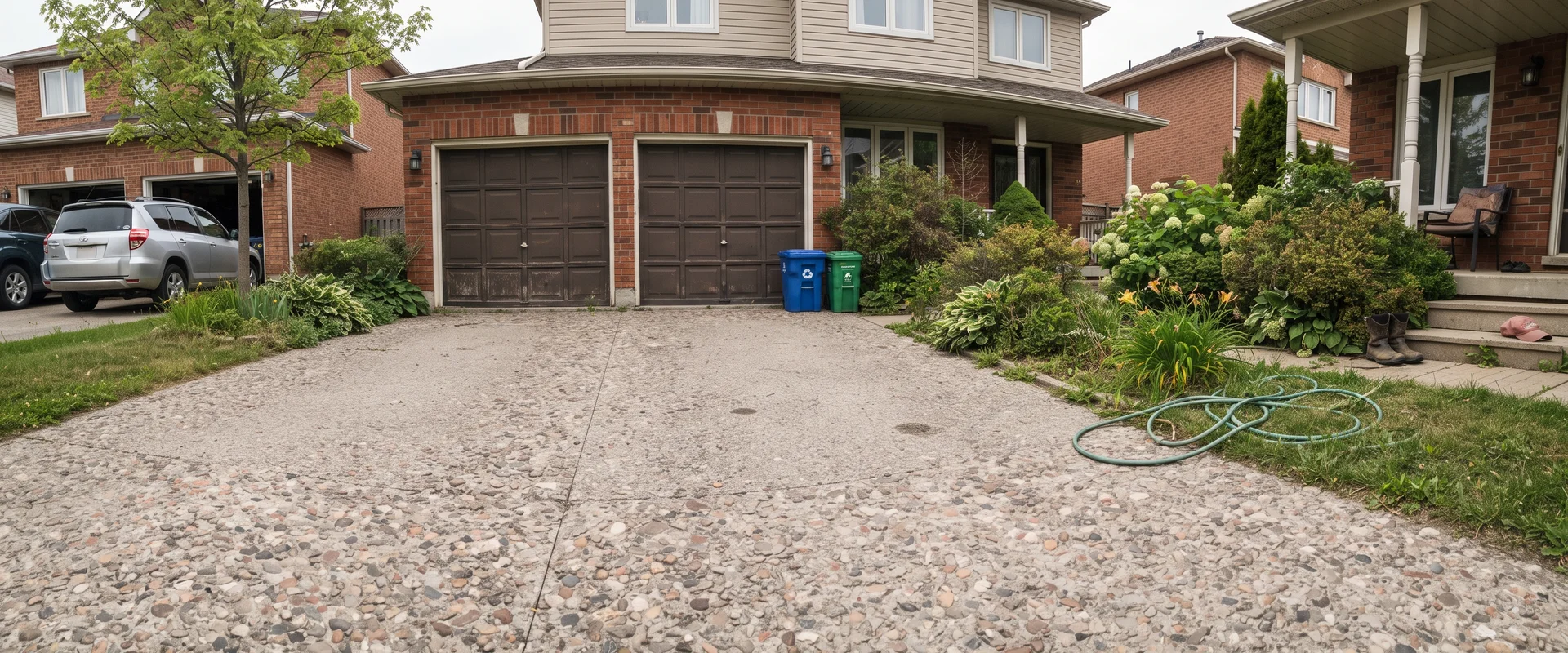
Exposed aggregate is concrete with its top layer of cement paste removed, revealing the stone underneath. The result is a natural, textured surface that looks quarried rather than poured, and grips better underfoot than any other decorative concrete finish.
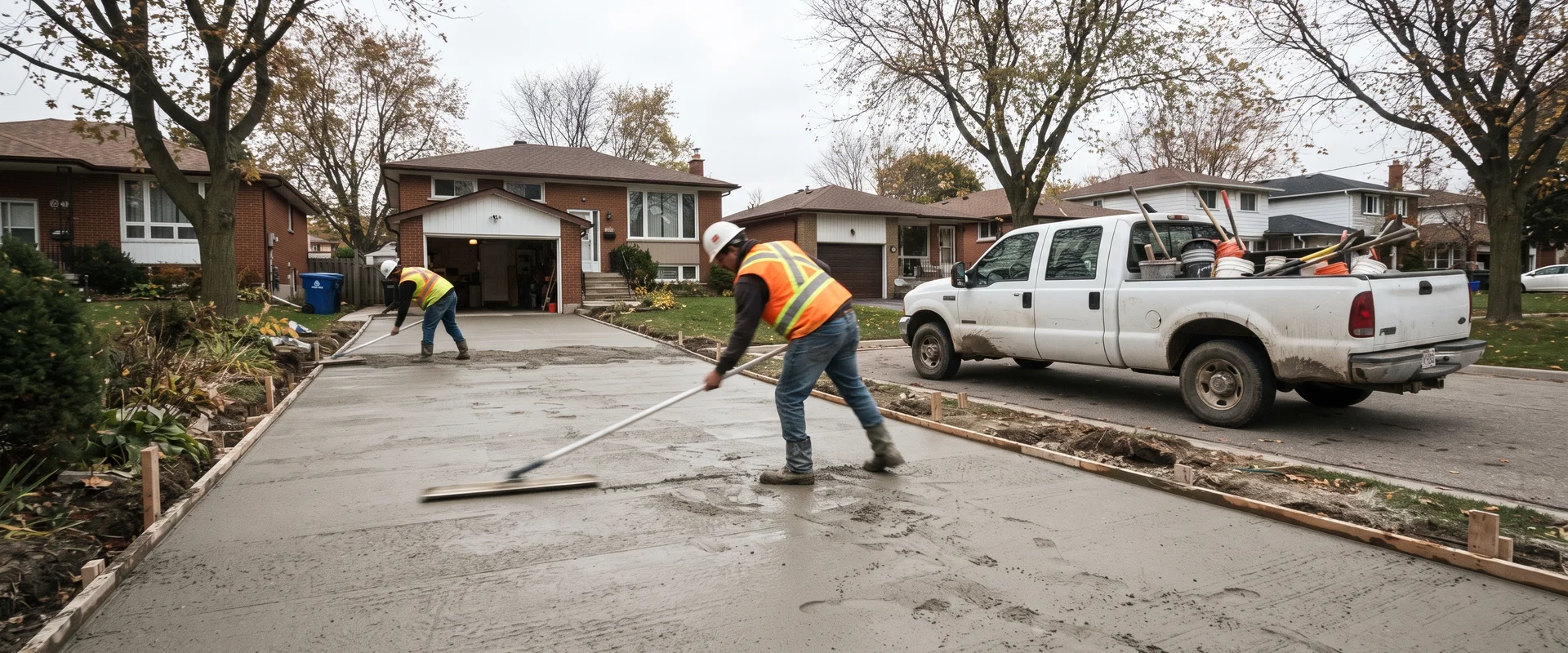
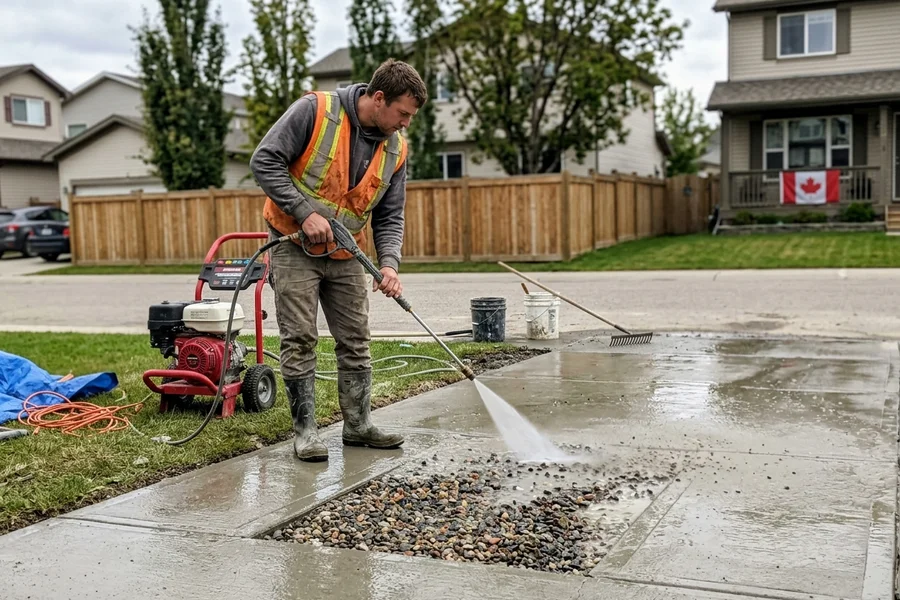
The technique is simple in principle and precise in practice. After the slab is placed and floated, we spray a chemical surface retarder that stops the top few millimetres of paste from hardening while the concrete below sets normally. The following day, a controlled pressure wash removes that softened paste and reveals the aggregate. How long we wash and at what pressure determines the expose depth: micro, light or medium.
There are two routes to the finish. Washed aggregate reveals whatever stone is already in the mix, which means you get what the plant supplies. Seeded aggregate broadcasts your chosen decorative stone onto the fresh surface and floats it in, which gives complete control over colour and stone size. Seeded costs more and looks considerably better when a specific look matters.
Finally, sealing. Exposed aggregate must be sealed, and the product matters more here than on plain concrete because the sealer sits directly on the stone. A non-yellowing acrylic keeps the colours true. Cheap sealers turn amber under Toronto UV within two seasons and there is no easy way back.
What’s Included
- Stone selection with physical sample boards
- Excavation, compacted granular base and reinforcement
- Air-entrained concrete placement
- Decorative stone seeded and floated in, where specified
- Chemical surface retarder application
- Controlled pressure wash to the agreed expose depth
- Efflorescence wash before sealing
- Non-yellowing acrylic sealer
- Saw-cut control joints and tooled edges
Common Problems We Solve
Slippery Driveways and Walkways
A smooth trowelled or lightly broomed slab on a slope becomes genuinely hazardous when wet or frosted. Exposed aggregate is the most effective answer, because the mechanical texture works regardless of how much water is on the surface.
Staining on Plain Concrete
Oil drips, leaf tannins and de-icing residue show badly on flat grey concrete. The variegated tone of exposed aggregate hides all of it, which is why it wears so well visually on driveways over a decade.
Surface Wear on High-Traffic Areas
Cement paste is softer than aggregate. On a plain slab, the paste wears first and the surface degrades. On exposed aggregate, the stone is already the wearing surface, so it holds up better under traffic and shovelling alike.
Yellowed Sealer From a Previous Contractor
A common call. Where the aggregate itself is sound, the old sealer can be stripped, the surface cleaned and washed of efflorescence, and a non-yellowing product applied. The stone colour comes straight back.
How Much Does Exposed Aggregate Cost in Toronto?
Exposed aggregate runs $10 to $18 per square foot. The drivers:
- Washed or seeded. Seeding decorative stone adds material and labour.
- Stone choice. Standard pea gravel is the base cost. Granite and custom blends cost more.
- Expose depth. Deeper exposes take more washing time and more careful control.
- Area and shape. Curves, borders and small areas need more edge work.
- Base condition. Removal of an existing slab and any extra excavation is quoted separately.
- Sealer specification. UV-stable premium sealers cost more up front and last longer.
Where Exposed Aggregate Works Best
Concrete driveways, particularly sloped ones, where winter grip and stain resistance both matter. Walkways and front paths, especially north-facing ones that stay icy. Pool decks, where wet feet and safety are the priority and a light stone blend also keeps the surface cooler. Concrete patios, where a natural stone look is wanted without the joints and settlement of individual pavers. Decorative borders around a stamped concrete or broom-finished field, which gives contrast at a fraction of full decorative cost.
Maintenance
Rinse and sweep as needed. Reseal every two to three years with a non-yellowing acrylic, which we handle under concrete sealing and waterproofing. Use a plastic shovel rather than a metal-edged one, and prefer chloride-free ice melt where practical. Efflorescence that appears in the first year is normal and washes off with a mild acidic cleaner.
Send us the area, a photo of the house and your preferred stone tone, and we will come back with a written published-rate quote inside two hours.