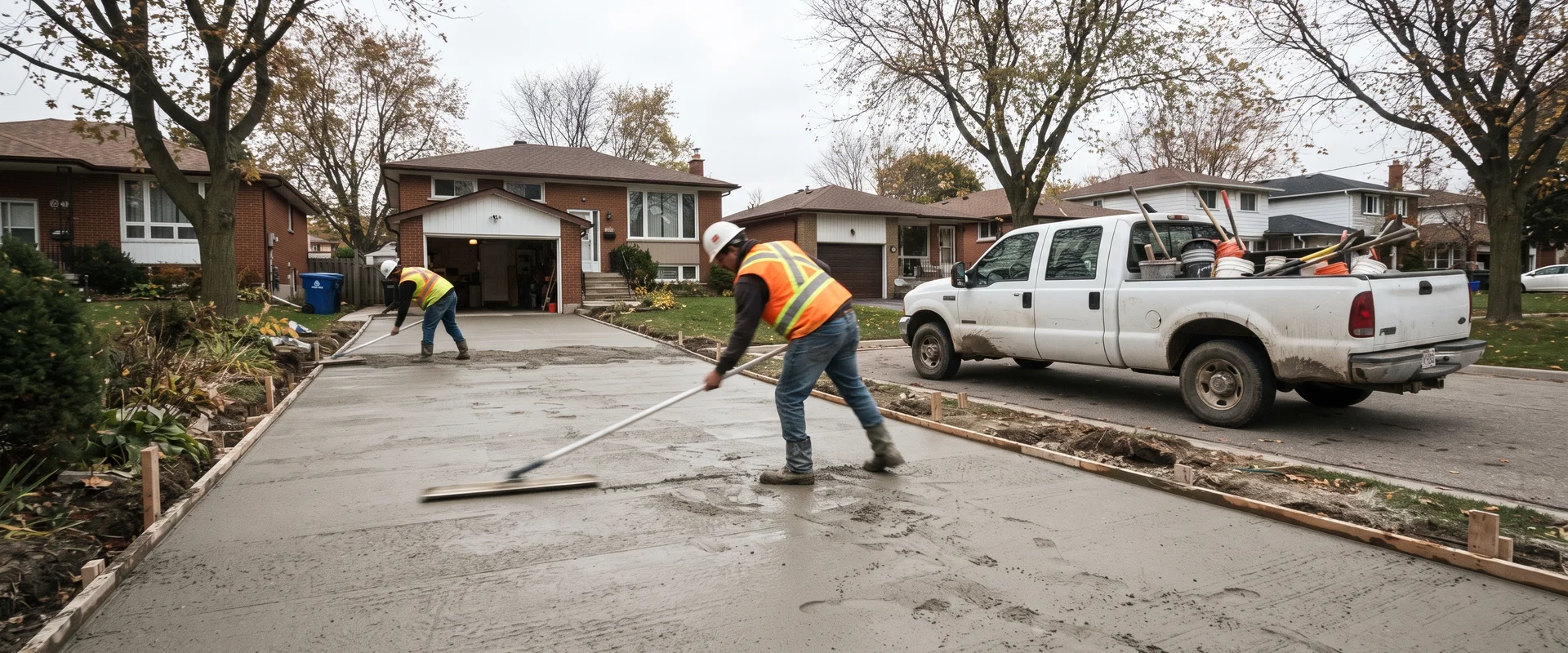
What Is Concrete Polishing?
Polishing turns an existing concrete slab into a finished floor using nothing but abrasion and chemistry. There is no coating, no covering and nothing applied that can later fail. The floor you end up with is the slab you already had, cut back, hardened and refined.
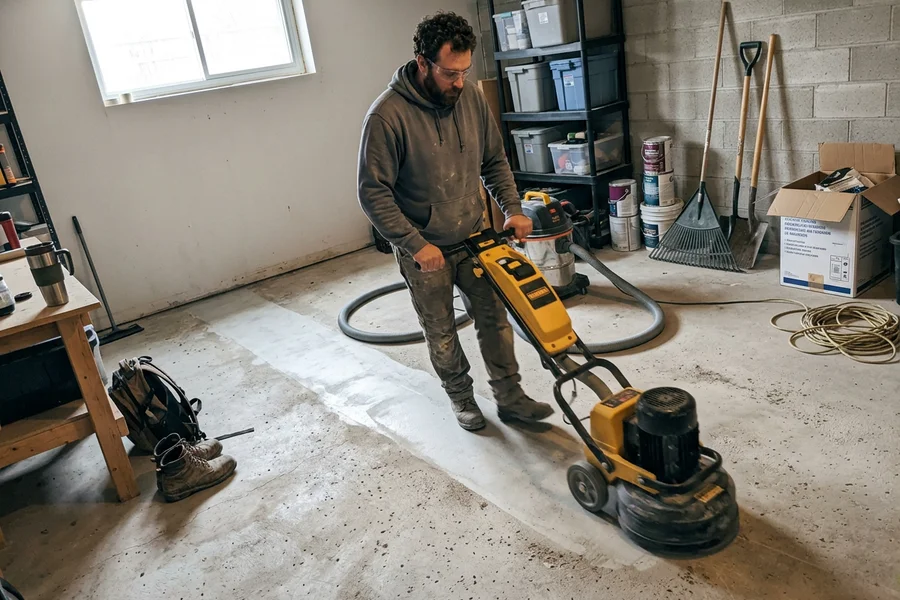
The sequence runs in two halves. First, metal-bond diamond tooling on a planetary grinder cuts through the surface paste to whatever depth of aggregate exposure you have chosen. This is the shaping stage, and it also removes old adhesive, coatings and surface damage. Then a lithium-silicate densifier is applied. It penetrates and reacts with free lime in the concrete to form additional binder inside the pore structure, which measurably hardens the surface.
The second half is polishing proper: progressively finer resin-bonded pads, up to 1,500 grit for a full mirror, followed by burnishing. Gloss develops because the surface is being made flatter at a microscopic scale, not because anything shiny is being added.
Every machine runs on dust extraction with HEPA-rated filtration, which is not optional when most of our residential polishing happens inside occupied homes.
What’s Included
- Slab hardness, flatness and moisture assessment
- Test patch cut on your own floor before commitment
- Removal of adhesive, thinset, paint or existing coatings
- Progressive metal-bond diamond grinding with extraction
- Crack and joint filling with colour-matched semi-rigid filler
- Lithium-silicate densification
- Resin pad polishing to the agreed gloss level
- Optional penetrating dye and guard coat
- Final burnish and hand-back
Common Problems We Solve
Bare Basement Slabs
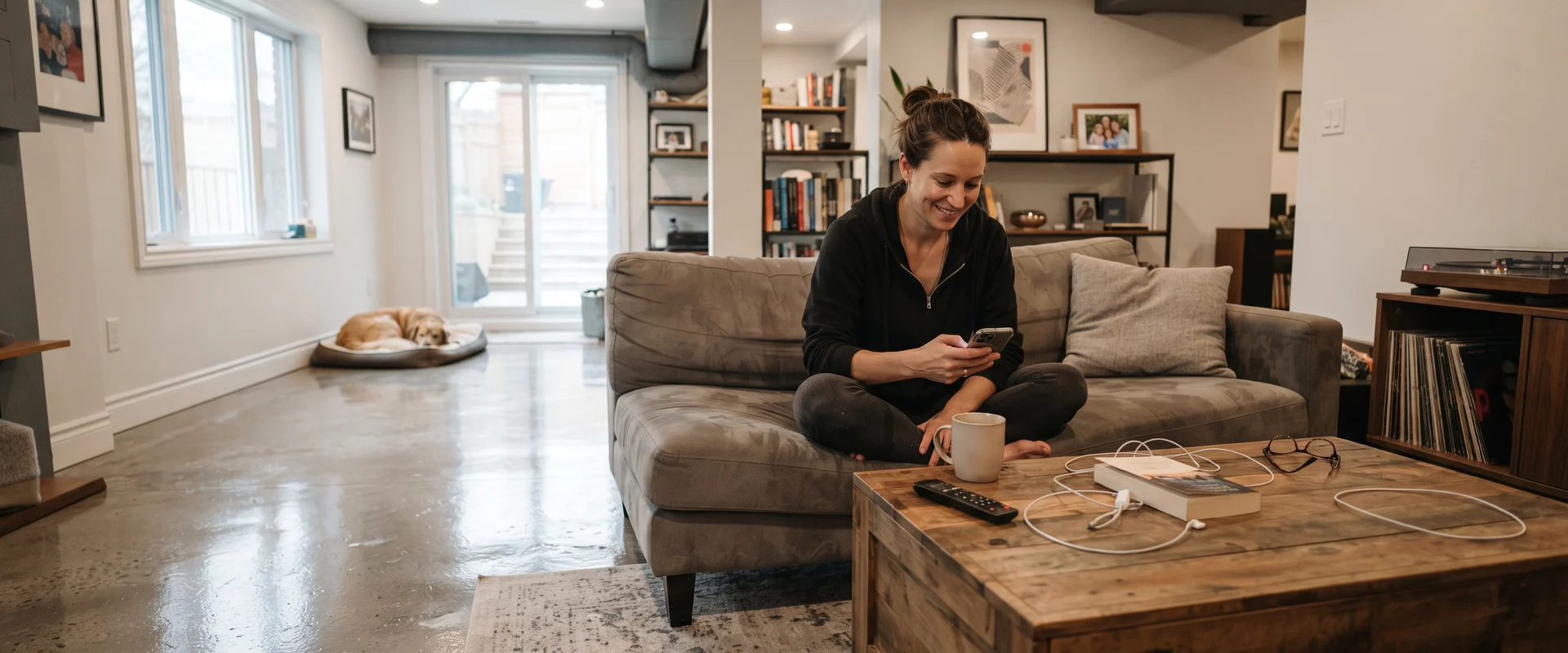
The most frequent residential call we take. A basement being finished has a perfectly serviceable slab under the carpet or bare underfoot. Polishing it gives a durable, waterproof, radiant-friendly floor and removes the cost of a floor covering entirely.
Garage Epoxy That Peeled
Garage floor coatings fail when moisture pushes from below or the slab was not properly profiled. Grinding the failed coating off and polishing the slab instead removes the failure mode altogether. A charcoal dye gives the dark finish most people wanted from the epoxy in the first place.
Dusty Workshop and Warehouse Floors
Slabs that shed fine dust have a weak surface layer. Densification hardens it enough to stop the dusting, even at a low gloss level, and costs a fraction of a coating.
Tired Retail and Office Floors
Where vinyl or carpet is being lifted anyway, polishing what is underneath produces a floor with essentially no replacement cycle. Adhesive removal is part of the grinding sequence.
How Much Does Polishing Cost in Toronto?
Polished floors run $3 to $8 per square foot. Drivers:
- Gloss target. Matte and satin need fewer passes than a 1,500-grit mirror.
- Aggregate exposure. Cutting deeper to expose stone means more metal-bond passes.
- Slab condition. Soft, patched or heavily glued floors take more preparation.
- Area. Large open floors are more efficient per foot than small rooms with lots of edge work.
- Colour. Penetrating dye adds material and labour.
- Crack repair. Extensive filling before polishing is quoted separately.
Choosing Exposure and Gloss
These are two independent choices and people often conflate them.
Exposure is how deep we cut. Cream finish shows almost no stone and gives the most uniform look. Salt-and-pepper shows fine aggregate and is the most popular choice for both homes and showrooms. Full exposure reveals the larger stone and produces a terrazzo-like appearance that depends entirely on what your particular slab contains.
Gloss is how far up the resin pad sequence we go. Matte, satin, semi-gloss and high gloss are all available at any exposure level. Higher gloss reflects more light, which matters in basements and showrooms, and shows footprints slightly more readily.
We cut a test patch on your own floor before starting the main area, because a photograph of somebody else’s slab tells you nothing about yours.
Maintenance
Dust mop regularly. Clean with water and a pH-neutral cleaner. Do not use acidic products, which attack the densified surface. Re-burnish traffic lanes every year or two to bring the sheen back. That is the entire maintenance programme, and it is why polished concrete tends to be the cheapest floor to own over a twenty-year horizon.
Polishing needs a slab worth polishing. Where the existing floor is too damaged to grind, we repair it first under commercial concrete repair or renew the surface with a bonded overlay, then polish. Where a colour is wanted, dye is applied mid-sequence as part of coloured and stained concrete. In warehouses and plants where chemical resistance matters more than sheen, an epoxy coating over a commercial concrete floor is the better specification, and showrooms are covered under retail and showroom floors.
Send us the floor area, current condition and the look you are after, and we will come back with a written published-rate quote inside two hours.