What Does Concrete Stair Work Involve?
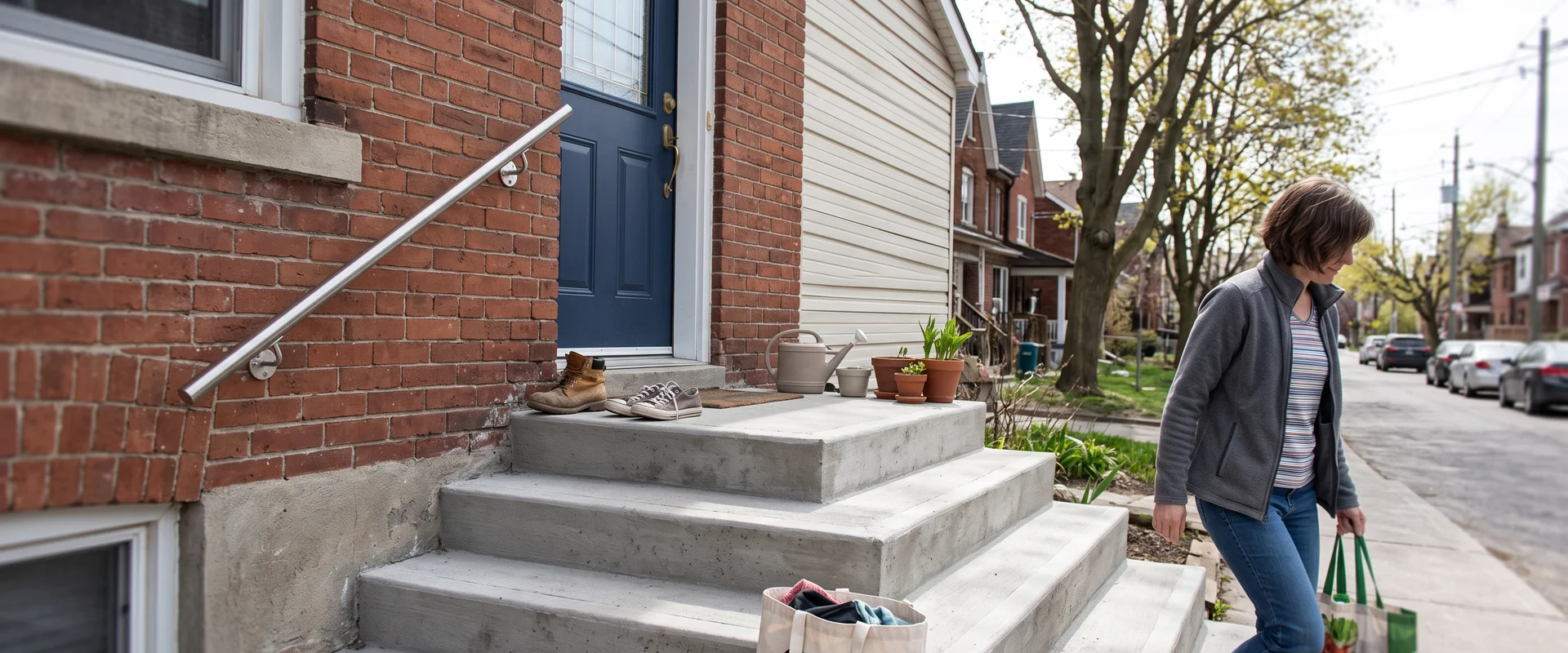
Steps are the most geometrically demanding concrete we pour. Everything about how a set of stairs feels underfoot comes down to two numbers: the rise of each step and the depth of each tread. Ontario Building Code Part 9 sets limits on both and requires the risers within a flight to be consistent, because an uneven last step is what catches people.
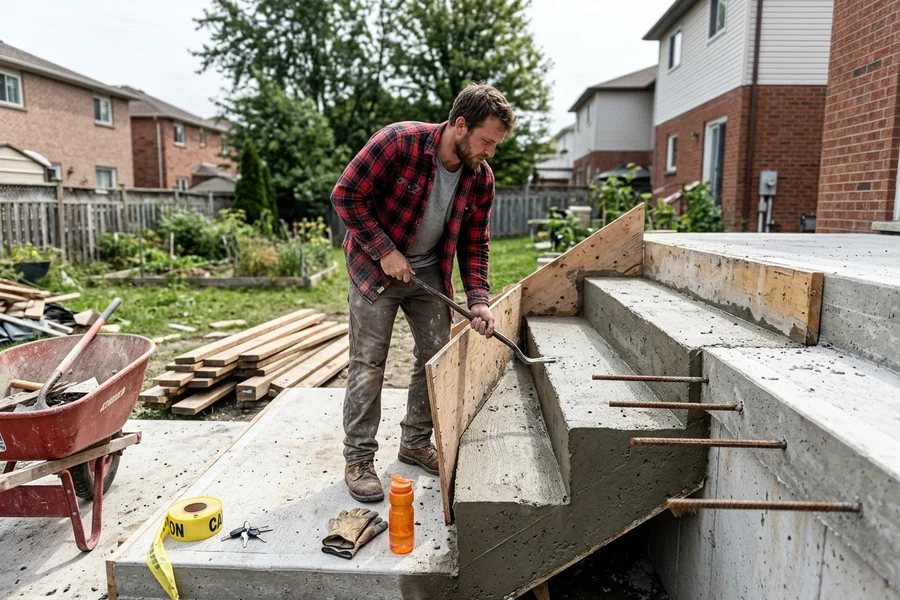
So we start with a tape measure, not a shovel. Total rise from finished grade to the door threshold, divided into equal risers, then a tread depth that fits the available run. Once the geometry is set, we excavate frost footings below grade, tie a rebar cage, form the risers, place the concrete, tool the nosings and finish the treads for grip.
Not every set of steps needs that treatment. When the structural core is sound and the damage is cosmetic, tread and riser resurfacing with a bonded polymer-modified mortar restores square edges and a clean finish for a fraction of the cost of a rebuild. We sound the steps first and tell you which category yours fall into.
What’s Included
- Measurement of total rise, run and threshold height
- Sounding to determine resurface versus rebuild
- Frost footings below grade on new builds
- Rebar cage and dowelling into the existing structure
- Formed risers and poured treads to OBC Part 9 geometry
- Tooled nosings and slip-resistant tread finish
- Handrail bracket thresholds set during the pour
- Curing and sealing
Common Problems We Solve
Crumbling Tread Noses
The nosing is the most exposed edge on a set of stairs and takes both the foot traffic and the salt. Once it starts breaking away, water gets behind the face of the riser and the damage accelerates. Rebuilding nosings with a bonded repair mortar stops that progression and restores the square edge.
Steps Pulling Away From the House
Shallow footings lift every winter. Once the gap opens, water runs straight down behind the steps and into the foundation wall. New footings below the frost line plus dowelling into the foundation is the permanent fix, and it is the main reason a full rebuild costs more than a resurfacing.
Uneven Risers
Steps built up over the years, or a walkway repoured higher than it was, leave one riser noticeably taller or shorter than the rest. That is a trip risk. When we rebuild, we redistribute the total rise evenly across all risers.
Salt Spalling on the Treads
Ontario winters put chloride directly onto the flattest, wettest part of the stair. Air-entrained concrete, a good tooled finish and an annual sealer are what keep treads intact. Once spalling exposes aggregate across a full tread, resurfacing is due.
How Much Do Concrete Steps Cost in Toronto?
Steps are priced per set, from $500 to $1,500. The drivers:
- Number of risers. A two-riser stoop is far less work than a six-riser flight to a raised porch.
- Resurface or rebuild. Bonded resurfacing is the cheapest path when the core is sound.
- Footings. New frost footings mean excavation, forming and a separate pour.
- Width and landing. Wide steps with a landing carry more concrete and more forming.
- Access. Tight side-yard access means hand placement rather than a chute.
Where steps and a walkway are being replaced together, doing both in one visit saves a second mobilisation.
Types of Stair Work
Resurfacing rebuilds the wearing surface on a sound structure. Partial rebuild removes failed treads and risers and pours new ones dowelled into what remains. Full rebuild removes everything, sets new frost footings and pours a complete stair. Interior stairs for basements and additions are formed against existing structure and finished smooth rather than broom textured.
When Do Steps Need Replacing?
Rebuild when the structure has separated from the house, when the footing has failed, when rebar inside is corroding and expanding, or when risers are so uneven the stair is unsafe. Resurface when the concrete rings solid and the damage is confined to the surface, the nosings or the coping. That call gets made on site with you standing there, and it is worth several hundred dollars either way.
Send us a photo and the number of risers and we will come back with a written published-rate quote inside two hours.