What Is Coloured and Stained Concrete?
There are four ways to get colour into concrete, and they behave completely differently. Choosing the wrong one is the most common decorative concrete mistake we are called in to fix.
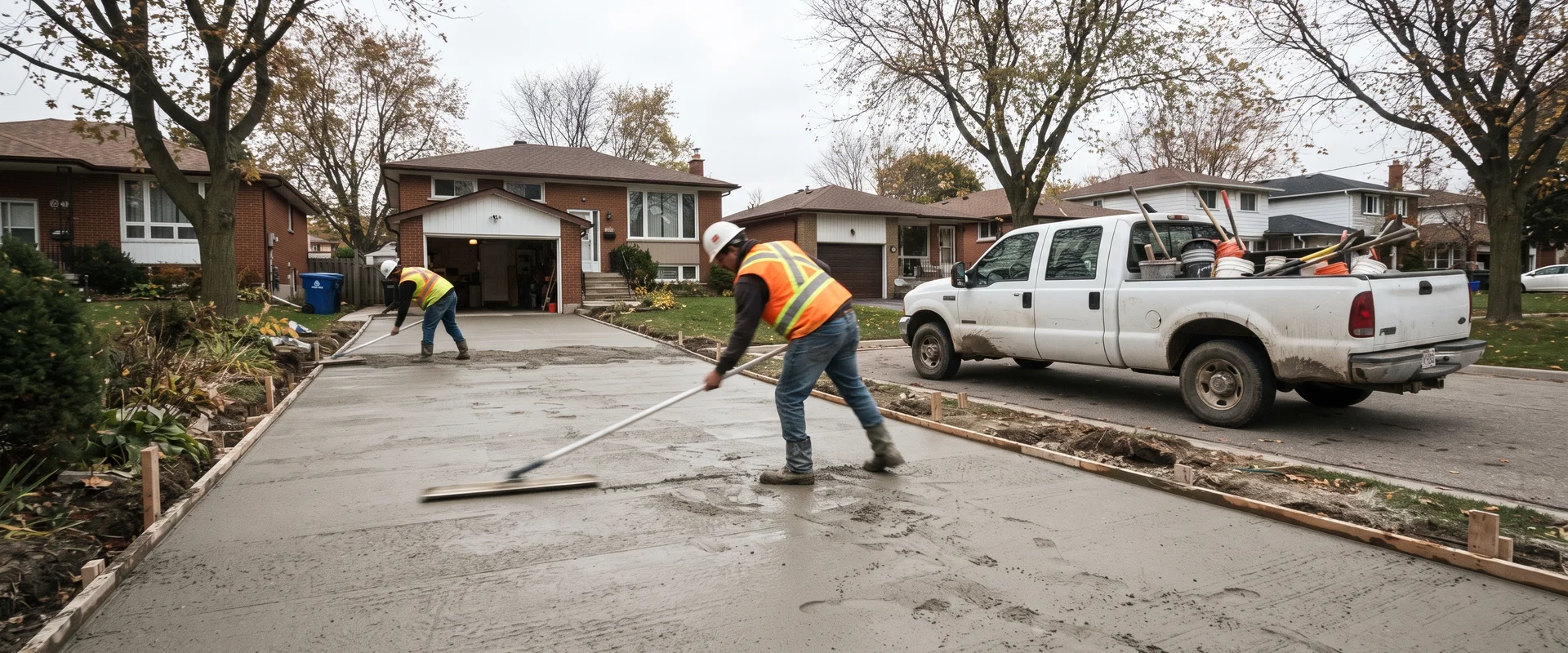
Integral colour is iron-oxide pigment batched into the concrete at the plant. The colour runs through the full depth of the slab, which means a chip or a saw cut still reads as the same colour rather than exposing grey. It gives a uniform, fade-resistant tone and is the most durable option for exterior work.
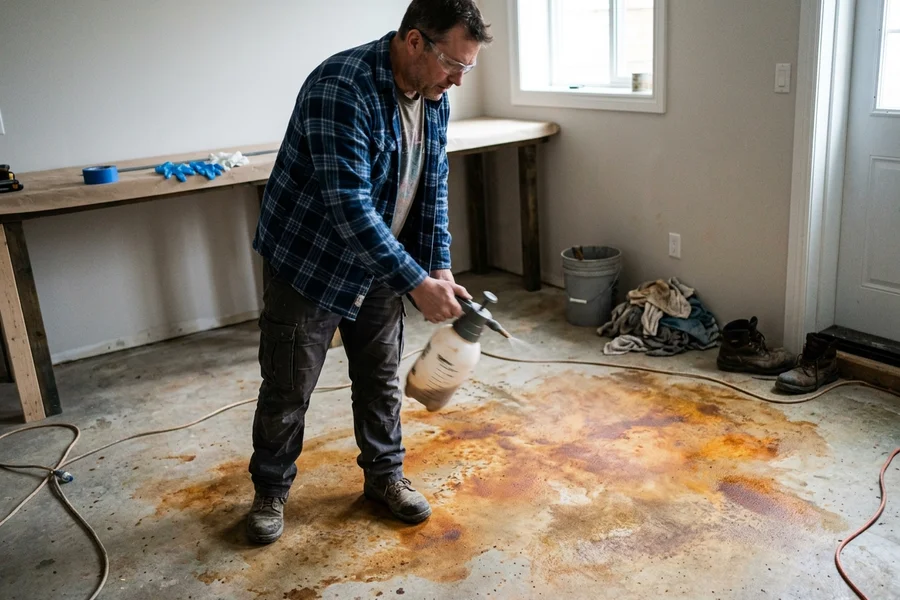
Acid stain is a reactive solution that combines chemically with free lime in cured concrete to produce permanent, translucent colour. It does not sit on the surface, it becomes part of it. The palette is limited to earth tones, and the effect is mottled and variegated in a way that looks genuinely geological. No two slabs come out the same.
Water-based stain deposits fine pigment into the concrete’s pores. The colour range is far wider, coverage is more consistent, and there is no acid to neutralise. It is the pragmatic choice when a specific colour is needed.
Dye produces the most intense, saturated colour and penetrates deeply. It is primarily an interior product, most often used on polished floors, because most dyes are not UV stable enough for outdoor exposure.
What’s Included
- Colour consultation with sample application on your slab
- Surface cleaning, profiling or grinding as required
- Removal of existing coatings, sealers or adhesive residue
- Integral pigment batched at the plant, or on-site stain application
- Controlled multi-pass application for variegated effects
- Full neutralising and rinsing of acid stains
- UV-stable sealer sized to interior or exterior exposure
- Maintenance schedule and product recommendations
Common Problems We Solve
Colour That Wore Off
Surface colour hardeners and coloured coatings wear through in traffic lanes and chip at edges, leaving grey underneath. Integral colour and reactive stain do not do this, because the colour is inside the concrete rather than sitting on top of it.
Blotchy Results From a Previous Job
Uneven stain almost always traces back to inconsistent surface preparation, or applying stain over residual sealer or curing compound that blocked penetration in patches. Grinding back and reapplying to a properly prepared surface fixes it.
Grey Interior Slabs
Basement, garage and workshop floors are usually plain grey concrete in reasonable condition. Cleaning, profiling and staining them is one of the highest-value cosmetic changes available on a per-square-foot basis.
Sealer Failure Over Acid Stain
Acid stain that was not fully neutralised and rinsed keeps reacting under the sealer and pushes it off. The repair is to strip, neutralise properly, rinse until the pH reads clean, dry thoroughly, and reseal.
How Much Does Coloured Concrete Cost in Toronto?
Colour is an add-on at $3 to $8 per square foot on top of the base concrete or floor preparation cost. Drivers:
- Method. Integral pigment is the cheapest per foot. Multi-layer stain work with accent shading is the most expensive.
- Colour depth. Darker and more saturated tones need more pigment or more stain passes.
- Surface preparation. Existing floors with coatings or adhesive need grinding before anything can be applied.
- Neutralising and rinsing. Acid stain requires a full wash-down cycle, which is labour and water management.
- Sealer specification. UV-stable exterior sealers cost more than interior products.
Choosing the Right Method
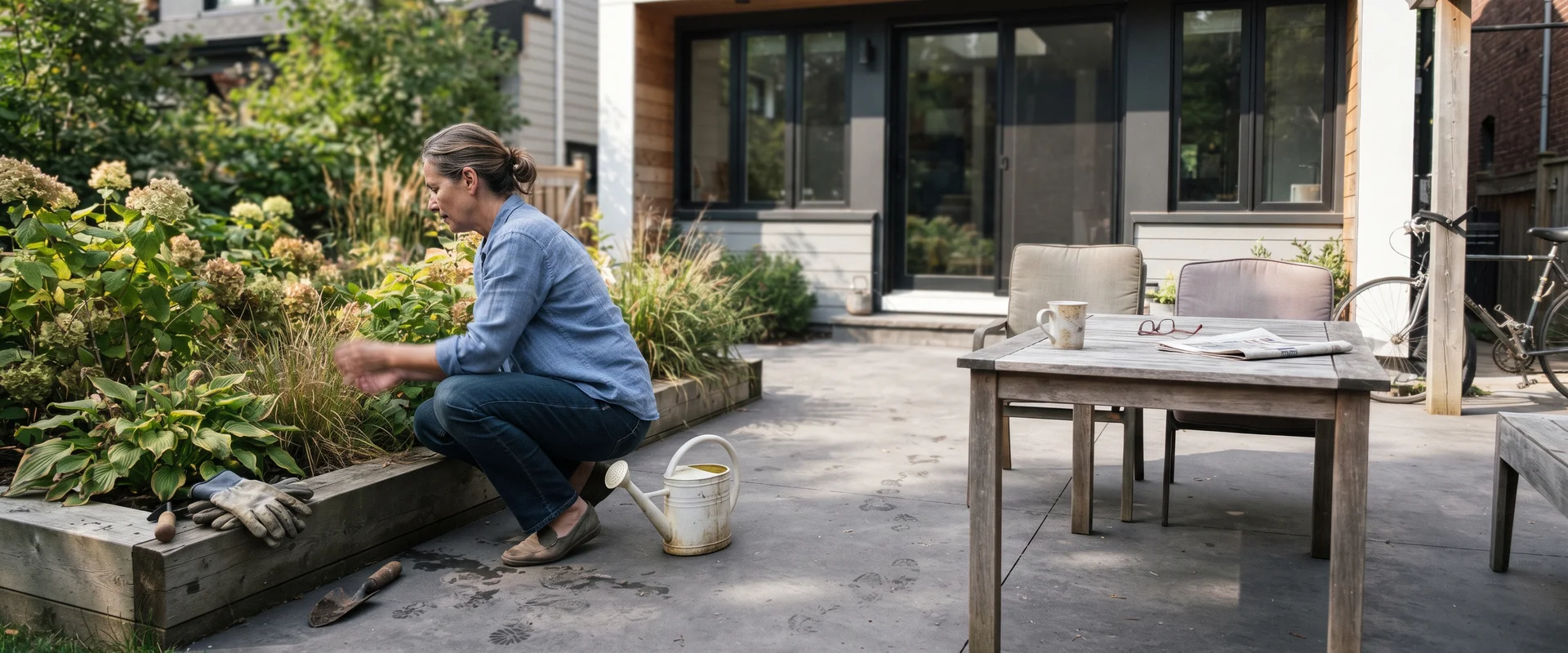
For exterior concrete driveways, concrete patios and concrete walkways, integral colour is almost always the right answer. It cannot wear off, it is UV stable, and it survives freeze-thaw and salt better than any surface treatment. Colour also combines well with a textured finish, so many customers pair it with stamped concrete or an exposed aggregate border.
For interior floors where a rich, organic look matters, acid stain is unmatched. For interiors where a specific colour is required, water-based stain or dye gives control that acid stain cannot.
For polished concrete floors, penetrating dye applied mid-sequence is standard, because it colours the concrete before the final resin passes seal it in.
We bring sample coupons to the quote visit and, on stain work, always test on the actual slab. Colour on concrete is a reaction, not a paint, and the only honest way to know what you will get is to try it.
Send us the area, whether the concrete is new or existing, and the look you are after, and we will come back with a written published-rate quote inside two hours.